
.svg)

Finance
|
September 28, 2026
High-Cost Merchant Cash Advances: When and How Ecommerce Brands Should Refinance



Ecommerce looks simple on the surface. You sell a product online, collect revenue, reinvest, repeat, right?
But in funding over 10,000 DTC brands, we’ve heard time and time again from founders that cash actually moves on a completely different timeline than demand in ecommerce:
Meanwhile, revenue drips in across payment processors, delayed platform payouts, and settlement windows. So, even if your brand looks profitable on paper, it’s actually starved for working capital.
If you’re still planning your capital strategy around when revenue arrives rather than demand, you may be unintentionally capping your business growth.
Many founders try to manage this by tightly aligning spend with incoming revenue. This seems like Business 101: You forecast top-line growth, map campaigns, and think in terms of sales targets.
But the realities of DTC operations mean your biggest decisions, such as inventory buys, ad scaling, channel expansion, all need to happen before that revenue shows up. This is a cash timing issue.
Because when you wait for cash to arrive before making moves, you are always one step behind your own growth, which forces you to:
The result is a neverending cash gap cycle: Miss the demand peak, scramble to catch up, stretch cash to refill inventory, then repeat the same pattern next quarter. It’s a tension ecommerce founders are familiar with and one that can be easily solved if you plan for the gap, not the demand spike.
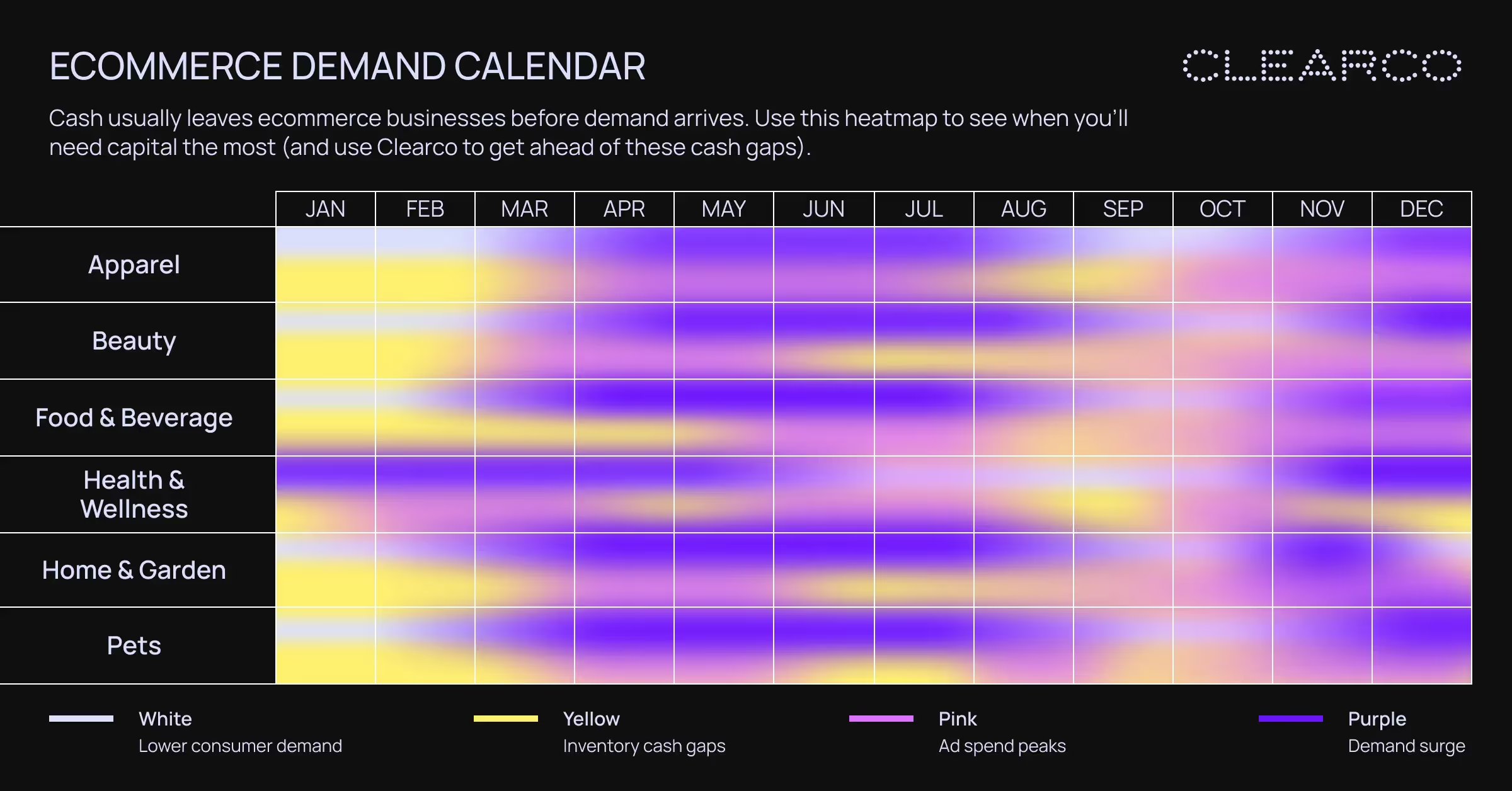
The Ecommerce Demand Calendar gives you a clear view of when your business is strongest and when it’s most vulnerable. The gap between those two moments is where a steady flow of working capital ensures you’re operationally and financially ready to make the most of demand surges.
The calendar shows the three forces that rarely line up in your favor:
Take Food and Beverage as an example: Demand peaks in November and December, which is no surprise. But the heatmap shows that inventory payments hit these brands as early as August, while ad costs start climbing in October. Clearly, if you wait until the Fall to think about capital, you’re already late.
Other industries like Apparel, Beauty, Health and Wellness, Home and Garden, and Pets follow similar patterns, where cash goes out of the business before it comes back.
With the Ecommerce Demand Calendar, you can see exactly when your business is under the most pressure and, more importantly, when you need capital to stay aggressive.
When ecommerce funding shows up after the moment of demand, it doesn’t unlock growth, but rather forces operators to go into recovery mode trying to patch up gaps.
Even worse, late capital often comes with payment structures that assume predictable cash flow. However, ecommerce is anything but predictable and fixed expectations can create pressure during slower demand periods, exactly when founders need flexibility most.
Instead, the best time to secure capital is when performance data is strong, not when cash is tight. If your ads are working, if your inventory is turning, if your revenue is trending up, that’s when you should be accessing additional capital. To understand, what this looks like for your business, compare your sales calendar against the Ecommerce Demand Calendar and ask yourself:
With these answers, rebuild your operations and capital timeline to proactively strengthen your momentum instead of slowing it down right before your biggest opportunity.
If you are seeing demand heat up, the question is simple: are you funded for the spike or just surviving the gap?


