
.svg)

Marketing
|
October 20, 2026
Black Friday & Cyber Monday Marketing: A Complete Strategy Guide for Ecommerce Brands



As holiday shopping intensifies and brands assess what is working, it might seem like the major sales peaks have already passed. Cyber Monday 2025 tells a different story and shows that the real momentum is only accelerating. For ecommerce brands and deal-seekers, Cyber Monday 2025 proves that the real momentum is only starting.
This year, Cyber Monday remained the second-largest online sales day in the United States, generating a record-breaking $14.25B USD in spending, which equals $16M USD spent every minute. Black Friday 2025 also set a new record with $11.8B in online spending, up 9.1% from last year, according to Adobe Analytics. Shoppers leaned even more heavily on new digital tools to hunt down the best deals, making this season’s online frenzy stronger than ever.
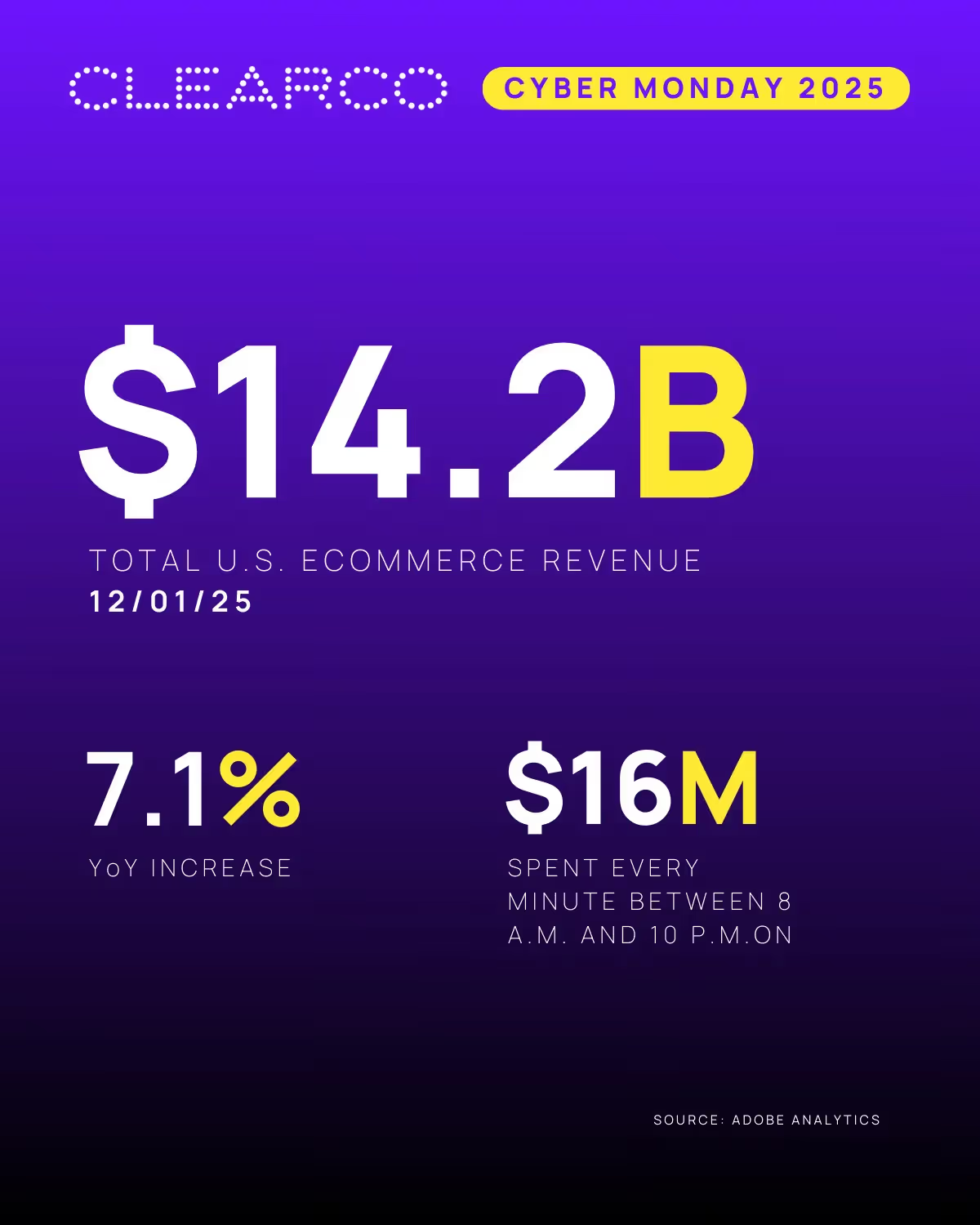
We’re breaking down this year’s performance with a recap of standout metrics, unexpected winners, and what these signals mean for founders planning for Q1. With 76% of U.S. adults shopping online and 75.9M Cyber Monday shoppers, the momentum is far from over.
Global ecommerce sales are projected to reach $8.14T by 2026. Our goal is to equip ecommerce brands with the insights they need to optimize inventory planning, sharpen marketing execution, and refine capital strategies heading into 2026. The mission is simple: convert holiday traffic into sustained Q1 growth.
Cyber Monday 2025 reinforced its position as one of the biggest spending days in ecommerce. Cyber Week data shows another record-shattering performance with $14.2B USD in Cyber Monday sales and $44.2B USD across the broader Cyber 5 period.
To maintain momentum amid more cautious spending, many retailers launched early BFCM offers throughout the week leading up to the five-day stretch between Thanksgiving and Cyber Monday. This strategy paid off.
Black Friday 2025 alone reached $11.8B USD in online sales, up 9.1% from 2024, with overall ecommerce sales surging 10.4% YoY. This is a stark contrast to the smaller 1.7% increase in in-store sales, as shoppers traded schlepping shopping bags for frictionless online carts. These trends reinforce what the data has signaled for years: peak-season purchases are increasingly moving online. Cyber Monday 2025 remains a clear indicator of where consumer demand is heading next, with a record-breaking 20M shoppers active over Thanksgiving weekend.
The shift from in-store shopping to ecommerce is nothing new, but this year, the digital gap widened dramatically. Here are the standout trends.
Consumers leaned into tech-driven ways to find deals, compare products, and make faster decisions, resulting in a clear reflection of AI-driven shopping behaviors.
While AI captured much of the spotlight, mobile shopping continued to dominate holiday sales.
Despite easy access to online shopping, many consumers are tightening their wallets due to economic factors like inflation, tariff pressures, and evolving consumer sentiment.
As the dust settles after a record-breaking Cyber Monday, one thing is clear: consumer demand spans the entire weekend and well beyond it.
Cyber Monday 2025’s results signal enormous potential for a record-breaking holiday season, but only for brands that plan ahead, stay agile, and fund opportunistically. With 55% of consumers shopping online during the holiday season and Cyber Week’s $44.2B combined spend, DTC brands face massive volume in a short burst.
The next step is simple: move fast and capture demand. Brands need capital and inventory readiness for the entire peak window and the months that follow, not just a single-day spike.
With rising volatility in consumer behavior, fiercer competition, and longer supply chain lead times, waiting until the last minute to fund inventory or marketing almost guarantees missed opportunities and inflated costs.
Coming out of Cyber Week, the smartest ecommerce brands are already shifting into post-holiday planning. Cyber Monday should be the springboard into Q1, not the finish line. Funding early with working capital is the financial strategy winning brands use to place Q1 purchase orders, launch retention campaigns, and reinvest in growth while competitors reflect on BFCM performance.
The time to solidify capital planning is now. Clearco helps founders build the cash flow flexibility they need to carry Cyber Monday momentum straight into Q1. If you’re building out your Q1 roadmap, secure ecommerce growth capital now, don't wait for orders to pile up.


